History
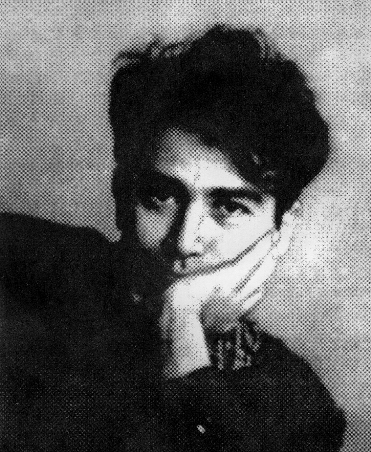
Gurgen A. Askaryan was the first one who proposed the detection of high energy neutrinos by acoustic signals of thermoelastic origin due to the energy deposit in a dense medium in 1957 [1] and by coherent radio Cherenkov radiation from the charge excess in a dense particle shower in 1962 [2].
In connection with the DUMAND project first experimental checks of the Thermo-Acoustic Model were performed at the end of the 70's of last century, confirming many of its predictions using high intense proton beams from accelerators [3].
The confirmation of the radio-Cherenkov effect came only a few years ago from dumping an intense photon beam in silica sand [4]
Several radio detection experiments started nevertheless already in the 90's and could draw in the meantime limits to cosmic neutrino fluxes. The acoustic technique had a big revival during the last years but is still in an research- and developement-phase. A first flux limit from an acoustic array was published last spring [5]. Also ideas about the direct production of radio signals by air showers in the atmosphere got new theoretical and experimental interest recently [6].
Overviews of the field can be found looking to previous conference proceedings ( e.g. Neutrino 2002 and Neutrino 2004).
[1] G. A. Askaryan, At. Energ. V3 (1957) 152  |
"First International Workshop on RAdio Detection of High Energetic Particles" (RADHEP, 2000) UCLA, Nov. 16-18, 2000 |
 |
First Informal Mini-workshop on Acoustic Cosmic Ray and Neutrino Detection Stanford University
|
last update: 17.05.2005,